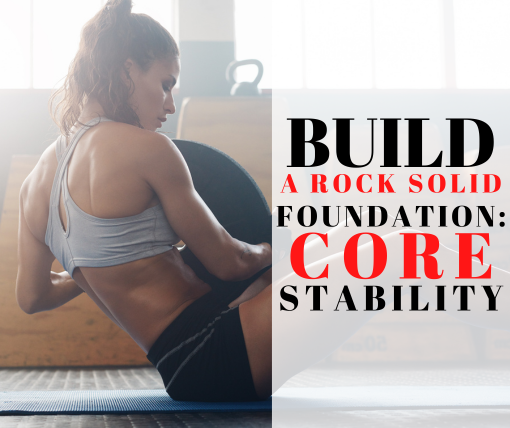
Build a Rock Solid Foundation: Core Stability and Why It Matters
Core stability is more than just having a six-pack — it’s about building a strong, functional base that supports every movement you make. From picking up a grocery bag to running a sprint, your core transfers force, stabilizes your spine, and protects you from injury.
What is Core Stability?
Core stability refers to the ability of your muscles—especially those in your abdomen, lower back, hips, and pelvis—to maintain proper alignment and control during movement. A stable core protects your spine, enhances performance, and helps prevent pain or dysfunction.
Why Core Stability Matters
If core stability isn’t addressed, the body compensates. This can lead to:
-
Lower back pain
-
Poor posture
-
Decreased athletic performance
-
Higher injury risk, especially during lifting or twisting motions
Fortunately, you don’t need a gym full of equipment to train your core effectively. Let’s focus on three essential exercises:
1. Bird Dog
Benefits:
-
Strengthens lower back and deep core muscles
-
Improves balance and coordination
-
Reinforces spinal stability without spinal load
How to Do It:
-
From hands and knees, extend the opposite arm and leg.
-
Hold for 5–10 seconds, return to start, then switch sides.
Prescription:
-
3 sets of 6–8 reps per side
-
3–5 times per week
2. Side Plank
Benefits:
-
Targets the obliques and lateral stabilizers
-
Builds anti-rotation strength
-
Promotes shoulder and hip stability
How to Do It:
-
Lie on your side, prop yourself on your forearm, stack feet, and lift hips.
-
Keep body in a straight line. Hold the position.
Prescription:
-
2–3 sets of 20–30 seconds per side (build up to 60 sec)
-
3–5 times per week
3. Curl-Up (McGill Curl-Up)
Benefits:
-
Trains rectus abdominis without stressing the lower back
-
Promotes spinal stiffness and control
-
Ideal for those recovering from or prone to back pain
How to Do It:
-
Lie on your back, one leg bent, one straight. Hands under the low back.
-
Raise your head and shoulders slightly off the floor, hold, then lower.
Prescription:
-
3 sets of 8–10 reps
-
3–5 times per week
Final Thoughts
You don’t need a flashy routine to develop serious core strength. With consistency, just a few minutes a day using targeted movements like Bird Dog, Side Plank, and Curl-Up can dramatically improve posture, performance, and protection from injury.
Start small, stay consistent, and let your core do what it was built to do — stabilize and support.
Alex Duran, Rowlett Transformation Center